Want a Blooming Garden All Summer Without Daily Watering?
Preparing your garden for summer 2026: drought-resistant plants, smart watering, and mulching for a garden that thrives without daily effort.
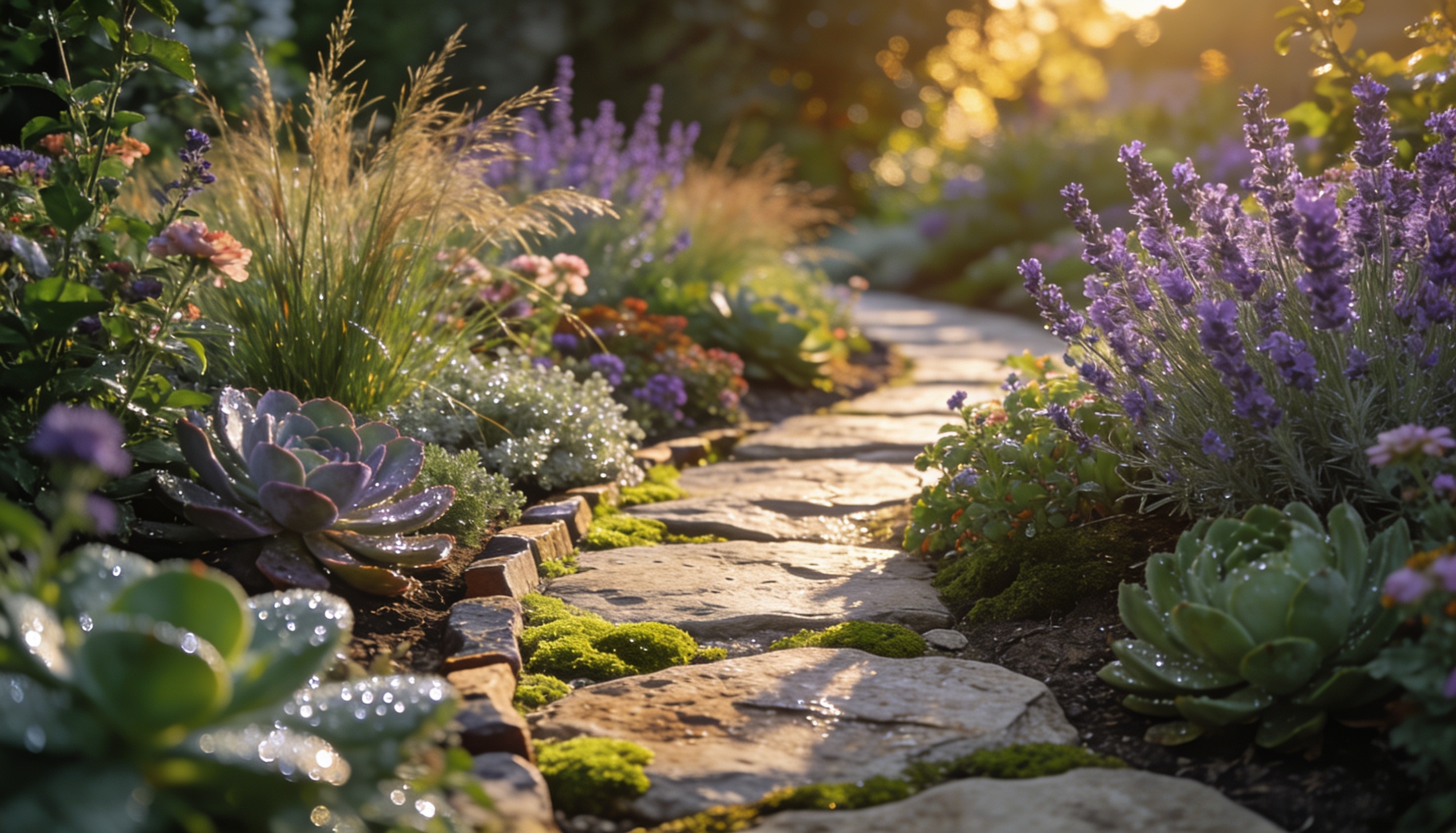
You caught your breath after the last water bill and wondered how your garden manages to drink more than you do. Or maybe you went on vacation for a week and came back to a yellow lawn and wilted petunias, as if you had not watered them in months. The good news is that a blooming garden all summer does not require daily watering or a fortune in maintenance. It comes down to how you prepare it now, at the start of the season, and which plants you choose.
Why morning watering makes the difference between a thriving garden and a struggling one
When you spray water on leaves at noon, about 30% evaporates into the hot air before it even reaches the soil. It is like pouring half your glass past the cup. Landscape specialists recommend watering between sunrise and 9 AM, when temperatures are low, wind is light, and water soaks into the soil at its own pace. Plants start their day with reserves, so they handle the midday heat much better.
Evening watering is plan B. It works, but water sitting on leaves overnight invites fungal disease. If you cannot water in the morning, direct the water straight to the roots, not the foliage.
- Water infrequently and deeply, not often and shallowly. Once every two to three days with plenty of water forces roots to grow deeper, where the soil stays moist longer.
- Shallow watering: a little bit every day produces weak roots. They stay near the surface and dry out the moment you put the hose down.
- The finger test: push your finger 2 inches into the soil. If it is dry at that depth, the plant needs water. If it is still moist, wait.
- Use a timer: a fruit tree needs 5–8 gallons per watering, not half a gallon sprinkled around it.
Plants that bloom beautifully and drink little: what to choose
Not all flowers are equally demanding. Some are like the friend who visits, has one cup of tea, and leaves. Others are the relative who moves in for a month and empties your fridge. For a blooming summer garden without daily effort, choose perennials and ornamental shrubs. They have already adapted to hotter summers.
Drought-tolerant perennials that bloom abundantly:
- Ornamental salvia: blooms in purple-blue spikes from June through September. Bees love it, and it asks for water only at planting time and during extended drought.
- Lavender: the prize for the least demanding garden plant. Sandy soil, full sun, almost no water once established after the first year.
- Coneflower (Echinacea): purple-pink flowers last for months; deadhead the spent bloom and another takes its place. It is a prairie plant, so drought is nothing new to it.
- Sedum: a succulent that blooms in fall, with fleshy leaves that store water. Zero maintenance effort.
- Stipa (feather grass): the unsung star of modern gardens. It sways in the wind, thrives in heat, and does not care about watering.
- Gaillardia (blanket flower): blooms yellow-orange until frost. Grows in poor soil and never complains.
Mulch: the secret weapon of gardeners who do not want to water
A 2–3 inch layer of mulch around your plants reduces water evaporation by up to 50%. It is the same philosophy as warm minimalism in interior design — less, but better. That means you water half as much as you would without it. Think of it as putting a lid on a pot: water does not escape into the air. On top of that, mulch keeps the soil cool, prevents weeds, and feeds the earth as it decomposes.
What to use depending on what you have on hand:
- Shredded bark: lasts the longest, 2–3 years, looks natural, works with all plants
- Straw: decomposes quickly, adds nutrients to the soil, inexpensive
- Grass clippings: free and readily available, but do not pile it too thick or it will ferment
- Decorative gravel: ideal for Mediterranean plants, reflects heat and holds moisture in the soil
- Partially decomposed compost: best for vegetables, feeds and protects at the same time
Irrigation systems that free you from the hose
If you stand with a hose for 30 minutes a day, you have wasted 15 hours in a month. In 2026, a drip irrigation system for an average garden costs around $30–50 and installs in two hours. Porous hoses let water seep out slowly, directly at the root zone — exactly where it is needed. Not on leaves and pathways.
Automated systems with moisture sensors are even more efficient: they skip watering if it has rained or if the soil is still damp from the previous session. Some connect to your phone and show water consumption for each garden zone. It is a small upgrade that can cut your watering bill in half.
Mistakes to avoid so you do not kill your flowers with too much care
Even the best intentions can destroy a garden. When preparing your garden for this summer, steer clear of a few common traps.
- Watering at noon with cold water: the difference between tap water at 60°F and soil scorched to 120°F on the surface creates thermal shock. Plants wilt even more.
- Fertilizing during a heatwave: fertilizers stimulate growth, and growth needs water. If it is 100°F outside, fertilizing forces the plant to work harder just when it wants to slow down.
- Choosing plants by how they look at the nursery, not by how well they handle your climate: every experienced gardener will tell you this is mistake number one. A Mediterranean plant sold at a premium in a cooler climate will not bloom the same way when winter brings frost and summer brings drought. Read the label, not the picture.
- Mowing the lawn too short in summer: grass cut to 1 inch looks great for a few days, but the roots dry out. Keep your lawn at 2.5–3 inches during summer. Taller blades shade each other and the soil loses less water.
- Ignoring weeds: weeds compete with your plants for water. A garden with weeds uses up to 30% more water than a clean one.
It matters less how much you water and more how, when, and what you plant — just like natural textures matter in a living room. A blooming garden all summer is not a luxury that needs servants. It is simply the result of good choices made in time: plants suited to your climate, a generous layer of mulch, a watering schedule that does not mean standing with a hose, and a little discipline with the lawn mower. Summers keep getting hotter, but your garden can bloom beautifully with far less water than you think.
Related posts

5 Visual Separation Methods Between Work and Relaxation at Home
Visual separation for your home office — 5 design methods that create visual boundaries between work and relaxation zones. Practical home office layout ideas.
7 Furniture Trends 2026 That Turn Your Home into a Sanctuary
Furniture trends 2026 — curved pieces, natural materials, and modular furniture for an authentic home. Discover how to transform your living space.

7 Rules for a Bedroom That Helps You Sleep Better
Bedroom design for restful sleep — optimal temperature, relaxing colors, ambient lighting, and textile materials that turn your bedroom into a sleep sanctuary.