5 New Trends That Transform Your Kitchen in 2026
Kitchen design 2026 — trends defining the modern kitchen: handleless fronts, natural materials, and bold colors. Practical layout ideas.
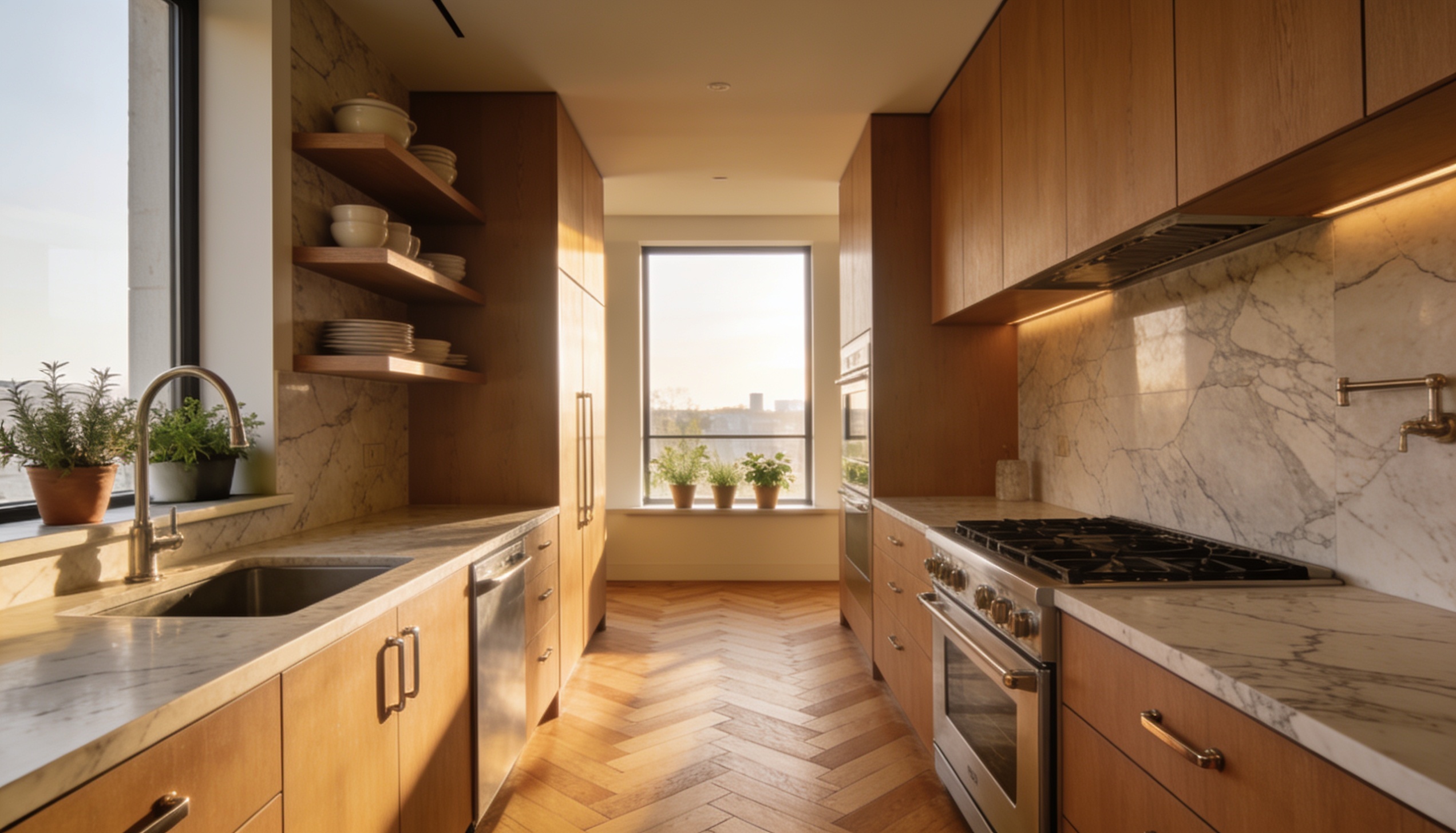
Planning a new kitchen and feeling overwhelmed by so many options? Totally understandable. Between fronts, countertops, colors, and appliances, decisions pile up faster than you think. In 2026, the furniture and appliance market is more varied than ever, and trends come and go quickly. The good news is that kitchen design is no longer about superficial trends — it is about choices that last. Here are five directions that truly matter for kitchen layout in 2026.
Handleless Fronts: The Line That Makes the Difference
The first thing you notice in a modern kitchen is the clean line of the fronts. No handles, no protrusions, no interruptions. The cabinet face is smooth, like a continuous surface. Push-to-open mechanisms have replaced traditional handles, and the visual effect is striking, especially in small kitchens.
Beyond aesthetics, this solution brings a practical benefit you only discover after using it: it is infinitely easier to clean. No corners where dust gathers, no handles you catch your clothes on. Plus, you eliminate the risk of a small child bumping their head while running through the kitchen.
Modern opening mechanisms work with pistons or electromagnetic pushers. Their quality has evolved significantly in recent years. Models from established manufacturers offer hundreds of thousands of cycles without failure. If you choose the push-to-open option, invest in quality hardware. The difference between a system that lasts 10 years and one that fails after two is immediately felt in your budget.
Earth Tones: Shades That Make You Want to Sit at the Table
The all-white kitchen is losing its supremacy. In 2026, designers are leaning toward warm, earthy shades that bring personality without shouting. Terracotta is perhaps the most surprising choice: a warm, burnt orange that pairs beautifully with natural wood and light countertops.
Navy blue remains a safe bet, especially on lower cabinets combined with creamy shades on top. Sage green, matte black, and ochre complete a palette where every hue feels natural, not forced. What do they all have in common? They make you want to sit at the table, not just cook on the go.
The Countertop That Makes the Difference: Sintered Stone and Wood
The countertop is the most important investment in a kitchen. It is the surface you cook on, set groceries on, and spill red wine on at parties. In 2026, two materials dominate the market: sintered stone and solid wood.
Sintered stone — a composite of quartz, porcelain, and glass pressed at extreme temperatures — resists heat, scratches, and thermal shock. You can put a hot pan directly on it without leaving a mark. It does not absorb liquids, does not stain, and requires no special maintenance.
Solid wood is making a strong comeback, not as the main surface but as an accent element. A strip of solid oak between two stone areas, perfect for kneading dough. Or an entire walnut countertop, with patina that deepens beautifully over time. Yes, it requires more care: special oil every six months, no harsh detergents, care with knife cuts. But the warmth it brings to a kitchen cannot be achieved with any artificial material. It is the kind of surface that improves with age, not the other way around.
Wood and Natural Textures Return in Full Force
The warm minimalism trend has also reached the kitchen. Solid wood, open-grain plywood veneer, rattan storage baskets. All bring an organic note to a space that might otherwise feel cold and technical.
This is not about rustic furniture or your grandmother’s kitchen. It is about calculated inserts. A solid oak shelf on a white tile wall. A wooden baseboard at the island’s base. Rattan baskets instead of plastic bins for vegetables. These small details visually warm the room without disrupting modern lines.
Smart Organization That Frees Up Space: Five Practical Solutions
Whether you have a 50 sq ft kitchen or an open-plan 300 sq ft one, how you organize the space makes all the difference. You can end up with a functional kitchen or one that frustrates you daily.
-
Tall drawers for pots and pans. Instead of cabinets with doors where you struggle to reach the bottom pot, you have direct access to every piece. Drawers with heavy-duty runners give you effortless order. One of those changes that, once you have them, you cannot understand how you lived without them.
-
The kitchen corner becomes a star. Carousel rotating systems or magic corner pull-out shelves turn the corner from dead space into the most useful storage area. You can reach every item without stretching halfway across the cabinet.
-
Vertical storage all the way to the ceiling. Cabinets that go up to the ceiling reclaim square footage you would otherwise lose. On the top shelves, keep rarely used items — the holiday platter, the large serving bowl.
-
Interior drawer organization. Drawers with customizable inserts for cutlery, utensils, and spices eliminate clutter. No more searching for the whisk for five minutes through a messy drawer.
-
Magnetic bars for knives and metal utensils. A magnetic strip on the wall frees up drawer space, keeps knives within reach, and reduces the risk of accidents when rummaging through a junk drawer.
Three Mistakes That Cost Money and Nerves
First and most common: ignoring the work triangle — the distance between the sink, stove, and refrigerator. Too close, and you bump into doors. Too far, and you run back and forth like a ping-pong ball.
Second: choosing materials by appearance rather than durability. The glossy white countertop looks stunning in the showroom, but every drop of coffee and every sliced tomato leaves a mark. Choose the material based on how you cook, not how it looks in a photo.
Third: skimping on lighting. A single ceiling fixture is not enough. You need light above the work surface, inside drawers, and under upper cabinets. Every work zone deserves its own light source.
The ideal kitchen in 2026 is neither hospital-white nor overloaded with decor. It is a balance between clean handleless fronts, materials that age beautifully, and colors that bring you joy every morning. When you manage to combine all of this with smart organization, you end up with a kitchen you want to walk into, not just cook in. And that is the only trend that matters.
Related posts
5 Visual Separation Methods Between Work and Relaxation at Home
Visual separation for your home office — 5 design methods that create visual boundaries between work and relaxation zones. Practical home office layout ideas.
7 Furniture Trends 2026 That Turn Your Home into a Sanctuary
Furniture trends 2026 — curved pieces, natural materials, and modular furniture for an authentic home. Discover how to transform your living space.
7 Rules for a Bedroom That Helps You Sleep Better
Bedroom design for restful sleep — optimal temperature, relaxing colors, ambient lighting, and textile materials that turn your bedroom into a sleep sanctuary.