5 Smart Automations That Cut Your Energy Bill in 2026
Smart automations for energy savings in 2026. Thermostats, plugs, and sensors that lower your electricity bill without sacrificing comfort.
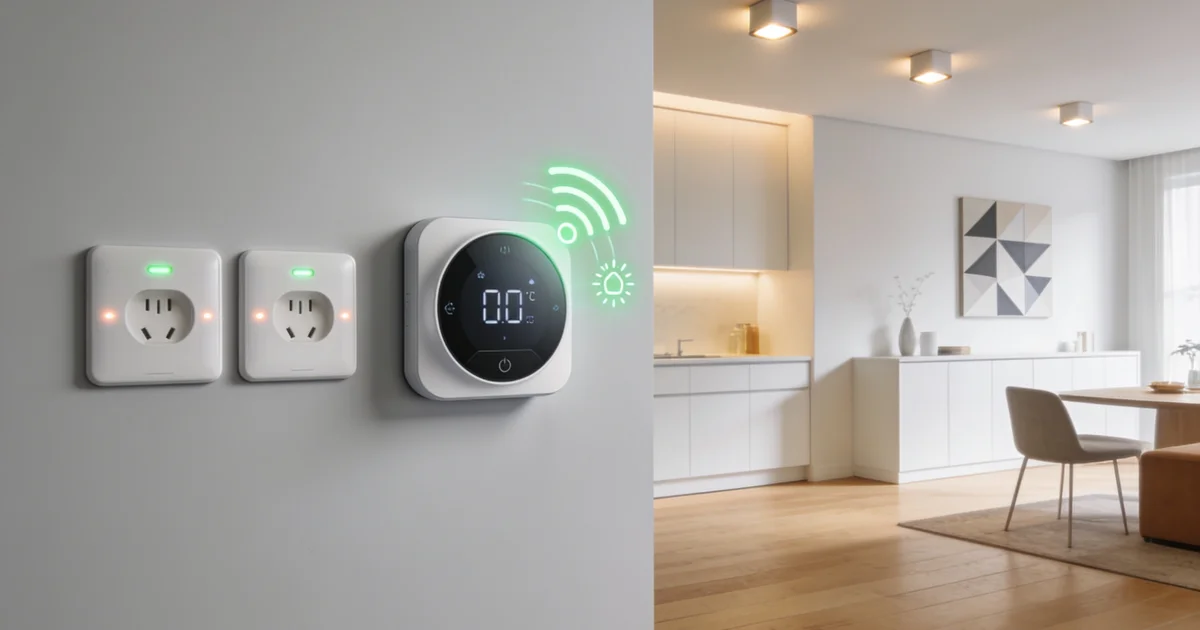
The electricity bill is a monthly concern for every homeowner in 2026. Energy prices are not dropping, but smart home technology has matured enough that you can cut consumption by 20–30% without freezing or giving up comfort. And no, you do not need to turn your house into a lab. Here are five automations that pay for themselves within the first winter.
Smart thermostat: the fastest ROI
A smart thermostat is the single most effective device you can install to lower your bill. Models available in 2026 — like those tested by CNET and The Verge — learn your daily schedule in about a week and adjust the temperature automatically. They turn down the heat when you are away and bring it back to your comfortable setting right when you walk in.
Real savings land between 10% and 23% on heating and cooling costs, according to market tests. On an average winter bill of $100–150, that means $10–35 per month. A budget smart thermostat costs between $50 and $80, so the investment pays for itself in a single cold season.
New features make a real difference: automatic eco modes, presence detection through sensors, and temperature recommendations based on indoor humidity. Some models integrated with the Matter standard communicate directly with modern boilers and only heat the rooms where you actually need warmth.
Smart plugs with weekly scheduling
It sounds basic, but smart plugs might be the most underestimated smart home investment. They cost between $8 and $20 each, install in two minutes, and cut standby consumption of devices left plugged in around the clock.
Your TV, set-top box, speakers, chargers, monitor, and coffee maker each draw 10–15 watts on standby. That seems small, but 10 devices x 15W x 24 hours x 30 days = 108 kWh per month — roughly $15–20 going toward standby power that does nothing useful.
Program a smart plug to cut power between 11 PM and 7 AM and during working hours, and you recover most of that loss. Some models even measure real consumption and show you exactly how much each device has saved in the app.
Automated lighting with motion sensors
Smart bulbs are probably the most well-known smart home devices, but few people use them to their full savings potential. It is not just about changing colors from your phone — it is about fully automating household lighting.
Install motion sensors in hallways, bathrooms, pantries, utility rooms, or on the balcony. Smart bulbs turn on when you enter and switch off 30–60 seconds after you leave. It seems like a small detail, but sometimes you leave the pantry light on for half a day. With 5–7 bulbs at 10W each, that is 50–70W of waste. Over a month, that can add up to $5–10 thrown away.
Outdoor daylight sensors take it further: bulbs adjust automatically based on how much sunlight comes through the window, maintaining a steady light level without wasting energy when the sun is bright enough.
Smart room-by-room heating management
Zone heating systems are the next level of savings. Instead of heating the whole house to the same temperature 24/7, you install smart thermostatic valves on each radiator and program them independently.
The bedroom wants 64°F at night, not 72°F. The home office only needs heat between 9 AM and 5 PM. The living room warms up in the evening when you are watching TV. With a smart valve costing between $15 and $30, you can turn down the heat in unused rooms by 5–7 degrees. It makes a huge difference: each degree you lower reduces heating consumption by about 6%.
When you have 6–8 radiators in the house but only 3–4 are in use at the same time, monthly savings can reach $30–60 during the cold season. With a central hub coordinating all the valves, you can set full scenarios: “away from home” drops everything to 60°F, while “home evening” warms only the living room and kitchen.
Energy monitoring and automated scenarios — the final step
All this effort becomes truly effective when you can see consumption in real time. Energy sensors on the main electrical panel, installed by a licensed electrician, show you exactly how much each circuit draws: lighting, outlets, heating, air conditioning.
With that data, you can build advanced automated scenarios. For example, the boiler turns on half an hour before you wake up, not two hours. The AC switches off automatically when you open a window (yes, door and window sensors communicate with the thermostat). The clothes dryer only runs between 10 PM and 6 AM — useful if you are on a time-of-use rate plan.
Traps to avoid
- Devices not configured correctly. You install 15 smart devices but leave them at factory settings. A thermostat permanently set to “comfort” or a smart plug always left on saves nothing. The difference between an efficient smart home and a useless one is in the setup, not the hardware.
- Smart bulbs without motion sensors. You buy smart bulbs but no sensors to turn them off automatically. Your finger still controls them, and you forget to turn them off just as often as regular bulbs. Presence sensors are what turn smart lighting from a toy into an efficient solution.
- Incompatible ecosystems. You pick devices from different ecosystems that do not talk to each other. Bulbs from one manufacturer do not communicate with sensors from another, and the thermostat does not know you opened a window. Without a universal hub compatible with the Matter standard, automated scenarios remain a dream.
- Ignoring home insulation. No automation, no matter how expensive, can compensate for poor thermal insulation. If you lose heat through single-pane windows or uninsulated walls, the thermostat will run non-stop and your bill will stay the same. Smart technology comes after you have solved the basics of energy efficiency.
If you want to start simple without investing in the whole package at once, a smart thermostat and a programmable plug are the first steps that bring the fastest difference to next month’s bill. After that, add one sensor or valve at a time as you see the investment come back to your pocket. For more layout ideas that blend comfort with efficiency, check out our article on cozy living rooms in 2026. It is a strategy that works regardless of budget.
Smart home energy automations are no longer a hobbyist gimmick in 2026. They are a practical investment with quick returns that improve your daily comfort and ease a recurring monthly expense. Start with a thermostat and a smart plug, and see the difference on next month’s bill yourself.
Related posts

5 Visual Separation Methods Between Work and Relaxation at Home
Visual separation for your home office — 5 design methods that create visual boundaries between work and relaxation zones. Practical home office layout ideas.

7 Furniture Trends 2026 That Turn Your Home into a Sanctuary
Furniture trends 2026 — curved pieces, natural materials, and modular furniture for an authentic home. Discover how to transform your living space.
7 Rules for a Bedroom That Helps You Sleep Better
Bedroom design for restful sleep — optimal temperature, relaxing colors, ambient lighting, and textile materials that turn your bedroom into a sleep sanctuary.